“I was quite stressed about coming here, because I didn’t know what was going to happen.” Co-creating child-centred information for and with children and young people in asylum appeals
- Human Rights in Context

- Jan 29
- 10 min read

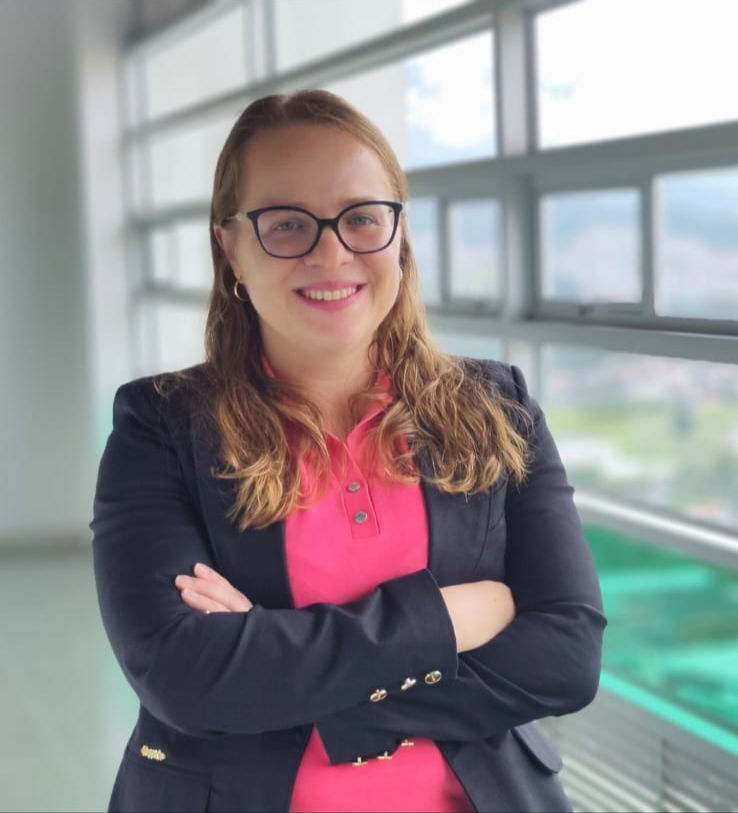
Ms Sara Lembrechts (left)
Sara is a PhD researcher at the UGent MigrLaw research group (FWO G015520N). Through an ethnographic and co-creative approach, she studies the procedural rights of children and young people in asylum appeal procedures at the Belgian Council for Alien Law Litigation. Her project is supervised by Prof. Ellen Desmet and embedded in the Centre for the Social Study of Migration and Refugees (CESSMIR) and the Human Rights Centre. You can email Sara or reach out on LinkedIn. Ms Ellen Van Vooren (right)
Ellen is a volunteer guardian, children's rights expert, and facilitator of co-creative design processes with children and young people. As a freelance researcher at MigrLaw, she formed a tandem with Sara in the co-creation of a child-centred courtroom and an information video for and with children and young people seeking asylum in appeal.
Setting the scene
When children and young people are denied international protection in Belgium, they can, like adults, lodge an appeal before an independent administrative tribunal: the Council for Alien Law Litigation (CALL). In this asylum appeal procedure, they appear before a judge who reassesses their application. Ethnographic and co-creative research with children and young people who have gone through this process shows that many receive little to no child-centred information about the hearing at the CALL. This lack of information leaves them with heightened feelings of stress, uncertainty and confusion in an already very demanding situation (Lembrechts, 2023).
To fill this gap, we co-created an information video in which three young people explain to their peers how an asylum appeal at the CALL unfolds. They guide viewers step by step through what to expect from a hearing in a clear, accessible and recognisable format. Children and young people were co-creators alongside judges, lawyers, guardians, CALL staff, researchers and filmmakers in brainstorming the content, choosing the format, drafting the script, acting, recording voice-overs, and reviewing the edit. The video is freely accessible on YouTube in seven languages (the original version recorded and subtitled in Dutch, a combination of voice-overs and subtitles in French, Arabic, Dari, Pashto and Spanish, and a version in Dutch with English subtitles). The CALL, the Guardianship Service, lawyers’ associations, reception centres and NGOs have embraced the video as a helpful tool to prepare children and young people for their hearing, and the CALL will soon distribute it systematically via a QR code in the summons letter for all unaccompanied minors (the summons letter has previously been adapted to a more child-centered format).
This blog post outlines the rationale and realisation of the children’s rights-based co-creative process behind the development of this video. We begin by clarifying what is at stake when children and young people appeal at the CALL. We then briefly situate their experiences of inadequate information within the legal framework governing their procedural human rights. Next, we explain the different stages of the co-creative trajectory. We conclude with a call to action, urging that initiatives like this video become part of broader reforms towards asylum procedures that are more accessible, child-centred and respectful of children’s rights.
A written procedure with an oral hearing
During the asylum appeal procedure at the CALL, the Council reassesses the first-instance decision of the Commissioner General for Refugees and Stateless Persons (CGRS) and issues a new substantive ruling. The judge can take three types of decisions. In most cases, the CALL confirms the first instance's decision not to grant the applicant international protection in Belgium. The judge may also reform the CGRS’s decision and recognise the applicant as a refugee or grant subsidiary protection. A third possibility is that the CALL annuls the decision, requiring the CGRS to take a new decision.
Although the asylum appeal procedure is written, several hundred children and young people are invited each year to an oral public hearing at the CALL in Brussels, assisted by their own lawyer or a substitute. Like adults, they may be heard by the asylum judge in the presence of their parent(s) or guardian, lawyer, an interpreter, and, where relevant, a trusted person to support them, such as a teacher, foster parent, or friend.

A sensitive conversation
To reach a well-founded decision, the judge needs as complete a picture as possible of the minor’s need for protection, living situation and personal circumstances. Hearings, therefore, often involve sensitive and deeply personal details. When the judge considers it necessary, they may ask targeted questions. Children and young people may answer these questions themselves, or their parent(s), guardian or lawyer may respond on their behalf. The person of trust does not formally intervene. The judge may also invite the minor to speak freely, for example by asking whether they wish to share their views, or if they have anything to add beyond what has already been said. Children and young people are under no obligation to speak. If they choose to do so, they may speak through the interpreter in their own language, or in the language of the procedure (Dutch or French).

Our empirical research shows that the hearing before the judge marks a crucial, yet particularly stressful, moment in the asylum procedure for children and young people. Many children and young people take the encounter with the asylum judge very seriously. They want the judge to genuinely hear, see, and understand them, even when they do not wish or do not feel able to speak for themselves during the hearing. The stakes are high: there is much to gain, but much to lose as well (Lembrechts & Van Vooren, 2024). Yet children and young people report that, despite the – often, but not always – good intentions of their networks, most received little to no information to adequately prepare them for the hearing at the CALL (Lembrechts, 2023).
Child-centred information is a human right
This lack of adequate information is problematic in several ways. Clear, child-centred information about what to expect from a hearing at the CALL can help children and young people regain a sense of control in a situation that can easily become overwhelming. In principle, such information is also a human right owed to all children and young people seeking asylum. This obligation flows from Articles 3, 12, 13, 17, and 22(2) of the UN Convention on the Rights of the Child (CRC), Article 24 of the EU Charter of Fundamental Rights, Article 22bis of the Belgian Constitution and relevant national, European and international case law.
The Council of Europe Guidelines on Child-Friendly Justice reinforce this binding framework. They require that legal procedures must be accessible, age-appropriate, timely, diligent, and tailored to the child’s needs and best interests, and that they must respect children’s rights to understand and participate meaningfully in the proceedings. The Guidelines (and particularly Guidelines 1-5, 41, 48 and 75) specify that children and young people should be directly informed before and throughout the procedure, in a child-friendly manner adapted to their age, maturity, gender and cultural background, in a language and format which they can understand (see also Stalford et al. 2017). The CRC Committee has likewise emphasised the connection between asylum-seeking children’s participation rights and their right to child-centred information (see, amongst others, General Comment 6, para. 25, Joint General Comment 22, para. 35, and the latest Concluding Observations on Belgium, para. 44) (see also Rap 2022).
Despite these clear obligations, child-centred information is almost impossible to find in the context of an asylum appeal before the CALL. Brochures and online platforms tailored to asylum-seeking children and young people exist, but they only cover the first-instance procedure. Our empirical study confirms earlier findings that lawyers often face severe time constraints when preparing an appeal with a child

(see also Dhondt, 2019), that the experience and level of involvement of guardians varies widely (see also Remue et al., 2025), and that children who rely on their parents for information end up, at best, with a fragmented understanding (see also Rap, 2020). Unsurprisingly, many children and young people report feeling “quite stressed” about coming to the CALL because they “didn’t know what was going to happen”.
Child-centred information is grounded in lived experiences
Adequate information is a prerequisite for meaningful participation, but the reverse is equally true: to be child-centred, resources must be grounded in children and young people’s own views so that the material genuinely speaks to their reality. This reciprocal relationship, anchored in the children’s rights framework and further

developed by authors such as Stalford et al. (2017), guided our co-creative approach. Building on our ethnographic findings (Lembrechts, 2023 and forthcoming), we knew that children and young people lacked information and that, in their view, a short, visually engaging video would be the most effective format. Guardians, lawyers, judges, and CALL staff had echoed this view, confirming that brochures, websites, or written text would likely be less effective.
A co-creative trajectory
After we managed to secure funding, we convened a first ideation workshop with four Afghan boys aged 14 to 18 who had previously been heard by the CALL. Based on their experiences and assisted by the expertise of researcher and documentary-maker Lennart Soberon, we discussed the video’s goals, its content priorities, and its most suitable tone. Three of the Afghan participants subsequently contributed to the creation of a very basic prototype video in PowerPoint, which was briefly tested by distributing it in the CALL’s summons letters to unaccompanied minors.
During the testing phase, our search for a filmmaker and production company willing and able to realize the video’s objectives – not only within our budgetary and time constraints, but also in line with our rights-based approach (see also Van Vooren & Lembrechts, 2021; Lundy, 2007) and relational ethics of care (see also Roels, 2025) – led us to cooperate with award-winning director Camille Ghekiere and production company Het Bataljon. Creative house Kopergietery was engaged to offer a drama workshop on stage presence and getting comfortable with a camera, in which five Afghan boys participated – two who had been involved in the process earlier, and three new participants with and without personal experience at the CALL.
Two of them were eager to act in the video in the roles of Tariq and Danish. A third boy, who was still in the middle of his appeal procedure, participated anonymously as a background and voice-over actor. To ensure the representation of girls as well, Sadia was cast separately based on her earlier involvement in Kopergietery activities. All young people were engaged in adapting the script to their level of understanding and were coached individually to feel comfortable with all details of the process. The final script was double-checked with the CALL to ensure it was fully correct.
Shooting took place in one day at the CALL premises in Brussels. To ensure accessibility, we invested in producing multiple-language versions and included voice-overs alongside subtitles in some of the most widely used procedural languages. These recordings involved experts by experience, too. All actors, extras, voice-over actors, and the CALL were encouraged to provide feedback at multiple stages of the editing process and were asked to review their informed consent before the final video was published on Children’s Rights Day, 20 November 2025. An iterative dialogue with the Ethics Committee played a crucial role in overseeing the process, ensuring that each stage of the co-creation fully respected the rights, well-being and agency of everyone involved.
A delicate balance between realism and reassurance
Shaped by this co-creative journey, the video became, first and foremost, a product to support children who find themselves in an appeal procedure, offering a realistic picture based on accurate information. Understanding in advance where they need to be, what the courtroom looks like, who will be present, what happens after the hearing, and who is there to support them should help them feel more grounded when meeting the asylum judge, reducing some of the uncertainty associated with a moment that carries real weight. Second, by centring children’s own voices, the video may offer recognition, reassurance, and a sense of belonging to children and young people who may often feel isolated in the asylum appeal process. Without creating false hope or unrealistic expectations, the video visualises that they matter and that they are not alone.

A key area of tension we discussed throughout was the risk of disappointment if the video would create false expectations with information that is all too positive. Young people agreed that the video should not discuss the (un)likelihood of success on appeal, nor create false promises that “everything will be fine.” In the video, we seek to address this tension by briefly explaining the three possible outcomes of an appeal, without suggesting probabilities. At the same time, we aim to activate the responsibility of guardians and lawyers to support young people throughout the process, irrespective of the outcome.
And … ACTION!
Children and young people seeking asylum in an appeal have the right to an accessible, child-centred procedure that respects their human rights. Creating and distributing information grounded in lived experiences is a first step towards strengthening their feelings of empowerment and their rights to participate safely. Yet for this information to truly assert children’s agency (Stalford et al. 2017), they need a supportive network that can help them understand and process it.
Are you a guardian, lawyer, social worker in a reception centre, teacher, foster parent, friend or neighbour of a child or young person going through this procedure? Then this video is for you as well. On behalf of Tariq, Sadia, Danish and their peers, we warmly invite you to use it as a tool in your face-to-face meetings with children and young people, to watch it together in Dutch, French, Arabic, Dari, English, Pashto or Spanish, and to share your experience and feedback with us. In continued co-creation, initiatives like this video can become part of a broader movement towards legal procedures that are more accessible, child-centred and respectful of children’s rights.
The Human Rights in Context Blog is a platform which provides an academic space for discussion for those interested in human rights, democracy, and the rule of law. We are always interested in well-written and thoughtful comments and analyses on topical events or developments. Scholars from all disciplines, students, researchers, international and national civil servants, legislators and politicians, legal practitioners and judges are welcome to participate in the discussions. We warmly invite those interested in writing a post to send us an e-mail explaining briefly the relevance of the topic and your background as an expert. We will get back to you as quickly as we can. All contributors post in their individual capacity, and their opinions do not necessarily reflect the official position of Human Rights in Context, or any organisation with which the author is affiliated.