Who gets to grieve? Narratives of care and politics of grief
- Human Rights in Context

- May 18
- 12 min read
Updated: May 19

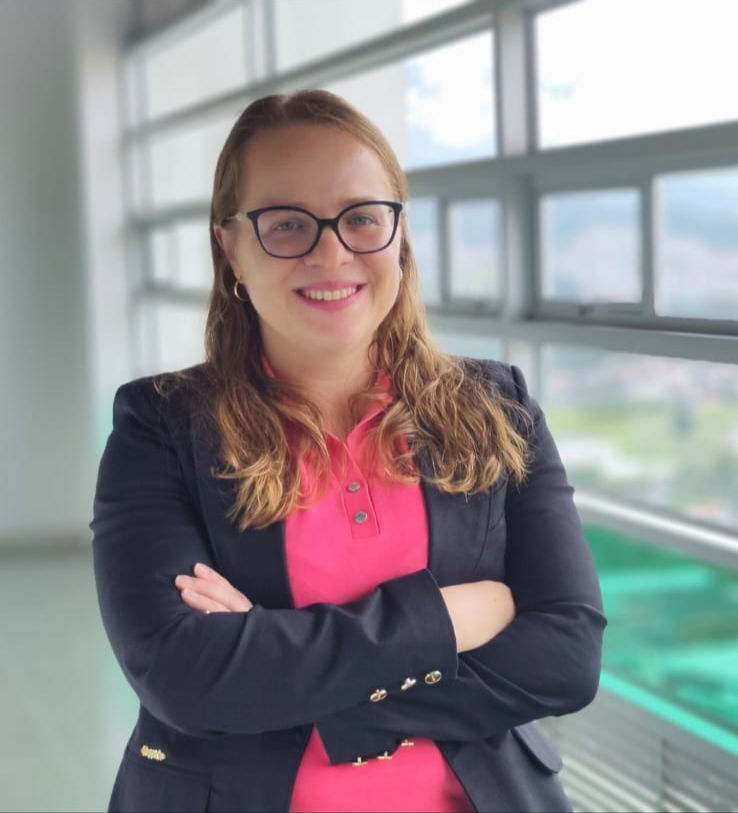
Ms Sara Vilares Castelló
Sara is finalising her MA in International Relations, specialising in International Security at the University of Groningen in the Netherlands. Her broader research interests take an interdisciplinary approach, linking power relations, discourse formation, and human rights. Sara was a Visiting Research Fellow at the Programme for Studies on Human Rights in Context at Ghent University under the supervision of Prof Dr Clara Burbano-Herrera.
Introduction
In a global political environment marked by profound ethical contradictions, this blog examines the devastation unfolding in Palestine following the intensification of violence in Gaza through a critical human rights lens. While states frequently invoke the language of care, solidarity, and humanitarian concern, their political actions often reproduce, or fail to challenge, structures of prolonged harm. Despite the unprecedented global visibility of mass suffering, international responses reveal a persistent hierarchy in the valuation of human life where some deaths are publicly recognised and mourned while others remain politically manageable or marginalised.
Drawing on feminist ethics of care, discourse theory, and Judith Butler’s concepts of vulnerability and grievability, the post conceptualises care not simply as a moral disposition but as a political technology embedded within global power relations. In this sense, care shapes whose rights are recognised, defended, or rendered invisible within international discourse. Focusing on Spain as a case of discourse production, the analysis traces how government speeches and official statements narrate care, responsibility, and vulnerability in relation to Palestine. Although Spanish political discourse frequently articulates solidarity with Palestinian suffering and invokes human rights principles, these expressions remain bounded by diplomatic caution and geopolitical constraints. By foregrounding the narrative production of care within the human rights discourse, this post contributes to critical human rights scholarship by revealing how compassion and rights-based language can coexist with political restraint and forms of complicity. This blog argues that care operates as a selective political technology that sustains, rather than disrupts, global hierarchies of grievability.
Politics of care, discourse, and global hierarchies
Examining Spanish political discourse through a critical human rights lens reveals how the language of rights, care, and humanitarian concern operates within uneven global structures of recognition and responsibility. While Palestinian suffering is acknowledged and solidarity is expressed, these discursive gestures often remain detached from meaningful political action capable of disrupting ongoing harm. This disjunction highlights how human rights discourse itself can become embedded within geopolitical constraints, allowing states to affirm ethical commitments while maintaining limited forms of engagement. Understanding care as a political practice exposes how recognition, compassion, and responsibility are selectively distributed, shaping whose suffering is rendered visible and whose rights language is mobilised. Such scrutiny is necessary to reveal the hierarchies that structure global compassion and to question the limits of human rights discourse as a tool for confronting entrenched forms of violence and inequality. Institutional empathy is conditioned by visibility and grievability, as well as by geopolitical proximity. The architecture that characterises different scenarios and battlefields may allow topics to remain alive for shorter or longer periods.
The government led by Pedro Sánchez has demonstrated a strong commitment to international law. This commitment is evident in public statements regarding the US-led bombings of Iran, in which the Prime Minister has emphasised respect for international legal frameworks (La Moncloa, 2025). The Geneva Conventions remain the cornerstone of humanitarian law, constituting a fundamental reference point in contexts of armed conflict, whether in Palestine, Iran, or elsewhere. In this sense, Spain’s position seeks to mitigate suffering by affirming universal rules that define who must be protected and which actions are prohibited, even under the most extreme conditions of warfare. Analysing Spain’s foreign policy narratives toward Palestine offers insight into the moral and political assumptions underpinning its international identity, while also illuminating broader global hierarchies of compassion and grievability.
Drawing from public speeches, press conferences, and parliamentary interventions by PM Pedro Sánchez and the Minister of Foreign Affairs, European Union and Cooperation, José Manuel Albares Bueno, these texts constitute Spain’s authoritative narrative repertoire. The analysis deconstructs the narrativity of care deployed in public discourse, examining the wordings used to describe the conflict, the actors involved, and the humanitarian consequences addressed. It shows how care is narrated, how grief is framed, and how responsibility is articulated or limited within Spain’s foreign policy discourse.
Spanish political and humanitarian narratives frequently invoke the language of compassion and reasonability, yet this care is unevenly extended. For instance, Israeli lives are typically recognised as lives that matter: their loss is intelligible, nameable, and publicly mourned (Ghani, 2025). By contrast, Palestinian bodies continue to be positioned within regimes of debility, disposability, and instrumentalisation, where suffering is acknowledged, but rarely translated into equal political recognition or protection (Gutiérrez, 2025). In this sense, care becomes conditioned on grievability. The recognition of vulnerability does not automatically entail responsibility, but it is filtered through political judgements that determine whose lives are deemed worthy of mourning and whose deaths can be absorbed as tragic but ultimately tolerable. Thus, Spain’s discourse reflects what Rahul Rao describes as “politics of invulnerability,” in which states perform moral concern while remaining insulated from the deeper ethical demands that would require confronting the biopolitical and necropolitical structures governing Palestinian life (Rao in Browne et al., 2021, p.79). Spain has frequently framed itself as a caring actor, positioned between Europe and the Global South, invoking solidarity while maintaining distinctions that preserve its moral authority. The polarisation between deserving and undeserving, mournable and unmournable, grievable and ungrievable bodies provides a mapping of how Spain constructs and distributes care, revealing the hierarchies embedded within its political and ethical frameworks.
Carol Gilligan’s observation that “speaking is one thing, being heard is another” (Gilligan, 2023, p.2) captures a central limitation of Spain’s ethics of care. Visibility does not guarantee recognition, and recognition does not ensure political transformation. While Spanish discourse makes Palestinian suffering more visible than in many other EU contexts, this visibility does not necessarily translate into Palestinian voices being heard on their own terms. The emphasis on interdependence that characterises the ethics of care underscores the need for a co-dependent understanding of humanity, particularly in the context of conflict. Yet interdependence remains selectively acknowledged, shaped by political narratives that determine whose vulnerability matters and whose claims are legitimised.
The Spanish government has strategically deployed care, responsibility, and protection as moral frames, constructing a rhetoric that situates Spain as a form of “humanitarian leadership” within the EU. However, this ethical legitimacy is inseparable from diplomatic calculation. Moral language often follows political decisions rather than guiding them, raising questions about the extent to which care functions as an ethical commitment or as a legitimising discourse that masks geopolitical interests. A close analysis of official speeches and statements reveals significant differences in who is allowed to speak, who is listened to, and who is silenced, demonstrating how global hierarchies of compassion are reproduced through differential treatment of suffering.
Discursive tensions between naming violence, genocide, and the limits of recognition
At the discursive level, Spain has positioned itself as a moral actor willing to name and condemn Israeli violence in terms that many European states avoid. Yet, this positioning is fraught with tension. Claims that Israel is committing genocide are often immediately reframed within public debate as accusations of antisemitism, reviving tropes that equate criticism of state violence with hostility toward Jewish people (Ministerio de Asuntos Exteriores, 2025). This discursive move goes beyond earlier framings of Israel as an apartheid state. However, genocide is not synonymous with apartheid. While apartheid presupposes domination and exploitation, genocide implies the intent to destroy a group in whole or in part (UN, n.d.). The political resistance to naming genocide, thus, reflects not only definitional disputes, but also the limits of what forms of suffering can be publicly recognised without destabilising existing moral and geopolitical alignments. Within this contested terrain, Spain articulates a narrative of care that can be disaggregated into several intersecting strands, including sovereignty and violence. Across these narratives, Palestinians consistently appear as figures through which power hierarchies are made visible, often to their detriment. While care is expressed, it is mediated through classificatory frameworks that reproduce uneven forms of recognition and constrain agency. The analysis is grounded in a reflexive approach that remains attentive to social, historical, and political contexts, while drawing on intersectional and embodied forms of knowledge. Within this framework, experience is not treated as anecdotal but as analytically meaningful, informing and shaping empirical inquiry.
Spain’s case also illuminates the politics of selective grief in the international realm. As Leeat Granek notes, grief is widely considered universal, yet its expression is always culturally, historically, geographically, and politically situated (Granek, 2014, p. 61). While grief is a fundamental human response to loss, it is also deeply social. Focusing on individual mourning while neglecting the structural conditions that produce loss delegitimises collective anger and obscures the political forces responsible for mass death (Granek, 2014, p. 63). As a result, Spanish discourse often acknowledges Palestinian grief, yet it risks depoliticising it by framing suffering primarily as a humanitarian tragedy rather than as the outcome of systematic violence. Additionally, since 7 October 2023, the widespread emphasis on acknowledging grief on “both sides” has normalised loss, obscuring deep asymmetries in power, history, and lived reality. By situating grief within the immediacy of the conflict rather than within its structural conditions, such narratives risk flattening responsibility and re-enacting cycles of violence. The language of symmetry functions here as a moral shortcut, offering the appearance of ethical concern while deflecting attention from the political architectures that produce suffering.
From Mbembe’s literature, state-controlled spaces become arenas where vulnerability is heightened, reflecting the State’s ultimate control over who lives and who dies. Fierce and Mackay (2023) call for a reorientation of global entanglements, acknowledging that actors are relationally embedded rather than isolated. The coloniality of care is found in colonial strategies of debilitation, such as famine or conditioned humanitarian aid, which exemplify slow violence (Mayblin et al., 2020, p. 117). In Palestine, the absence of care within the international community underscored the neglect of empathy, compassion, and grief. Emotional legacies, then, shape contemporary politics, producing security paradoxes.
The binary of Western Man versus Other underwrites the logic and defines the form of modern politics. It highlights the tenacious grip of white European hegemony and its related capitalist ideology that produces not only radical material inequality but also what Frantz Fanon names the existential “zone of non-being”, where some lives are deemed worthy and visible, and others are unworthy and invisible, a pattern which continues despite the reality that historical colonialism has ended. In this sense, Judith Butler’s argument that our modern institutions mediate reality for us, framing some lives as valuable (grievable) and others as not-valued (not-grievable), constructs a frame that actively allows us to apprehend some lives as livable, but not others. It is ultimately a dehumanising experience.
Intersectional expansion where care is shown not to be neutral, but actually stratified
The asymmetric distribution of care disproportionately affects marginalised women and girls due to factors such as socioeconomic class, race, rural, ethnic, or migratory status, and non-conforming gender identities. Public policies and foreign policy should focus on the proportion and appreciation of care, as the recognition and the redistribution of care work is central to achieving gender equality and a more ethical political arena.
There is an insistence in care ethics that responsiveness to care is an active contribution to the care interaction and that people, as dependent care receivers, make important contributions to the community and should be valued as such. Jorma Heier argues that the ethics of care is a version of virtue ethics that emphasises the development of character traits conducive to cooperative efforts. This view holds that moral problems are often best solved by individuals engaging in collaborative efforts to best satisfy the concerns of the parties involved, rather than through the context-free application of abstract ideas.
People exist in a community; therefore, the destruction of the community is the destruction of the self. There is no justification for this level of erasure. Ethical subjects must locate themselves within contemporary political systems and assume some responsibility for their participation in them. In this way, by assuming a neat divide between the individual and the collective, and between the public and the private, the binary has once again come up short in terms of explanatory power. A more complex rendering of responsibility is necessary. So, one of the challenges in Palestine is the question of liberation and what it entails. Liberation cannot be achieved by individuals alone. Change depends on transforming our social symbols, particularly those that condition how we think of ourselves in relation to others, and on cultivating practices that interrupt the status quo of violence and harm (Dunn, 2025, p. 51). An equal ethics of care requires a symbolic re-ordering away from individualism and a re-orientation toward reciprocity and mutuality.
Ultimately, decolonising must aim for a better mode of relating to others in society (Dunn, 2025, p. 36). Through the ethics of care, the purpose is to connect a decolonial approach with ethics (are they even separate entities?). Despite some converging principles, the system as a whole lacks formal unity. The caring system lacks an overall practical application in the international arena, as it is not yet a generalised and established modus operandi. In this sense, respect for human dignity is the guiding principle in the context of persons deprived of their liberty, as is the case in Palestine, from a systematic and collective perspective.
Palestine, starvation, and legal failure
Under international law, the deliberate use of starvation as a method of warfare through the denial of essential resources and the obstruction of humanitarian aid, as prohibited by the Geneva Conventions, constitutes a war crime. More broadly, practices such as collective punishment, forced displacement, and other forms of starvation-related violence have long been associated with urban siege warfare and may amount to crimes against humanity. Yet, a striking anomaly persists, as despite the articulation of policies that restrict access to food, medical care, and humanitarian assistance, such actions have not been consistently or formally qualified as war crimes in this context. They have pursued a deliberate policy of denying sustenance and have openly obstructed food delivery and medical support (Chater, 2025).
This disjunction exposes the limits of international legal enforcement. It underscores how the language of peace, human rights, and a rules-based order can remain performative when not accompanied by sustained political commitment. In this sense, Spain’s invocation of an ethics of care reveals how moral discourse can coexist with, and even obscure, alignment with entrenched global hierarchies shaped by longstanding asymmetries of power and responsibility.
At the same time, Spanish officials frequently acknowledge the limits of unilateral action, emphasising that this is not a localised conflict but one embedded in broader systems of military, economic, and diplomatic support. In September 2025, Foreign Minister José Manuel Albares reiterated Spain’s commitment to a two-state solution as the pathway to justice for Palestinians (Atlantic Council, 2025). Similarly, when Sánchez announced additional measures aimed at “stopping the genocide in Gaza” and supporting the Palestinian population, he characterised Israel’s military operations as unjustifiable attacks on civilians (La Moncloa, 2025). Taken together, these statements illustrate how a government can articulate compassion and project an image of responsible, relational engagement across distance, while remaining constrained by geopolitical realities that limit the translation of such discourse into transformative action.
Domínguez de Olazábal observes that dominant research and political agendas continue to frame Palestine mainly through the lens of post-1967 territorial disputes, failing to recognise the settler-colonial project rooted in European imperial histories (2019, p. 97-102). Within this framing, care continues to be articulated at the level of moral expression, without addressing its potential structural transformation.
Ultimately, selective grievability exposes the limits of care as a political practice when it remains detached from structural transformation. This blog post has sought to present a decolonial work, seeking to interrupt the social practices and beliefs that perpetuate the myth of Western superiority and reinforce the subject/object binary. In Palestine, a colonised, racially gendered, and oppressed experience constitutes only one dimension of a far more complex reality, one that exceeds the reductive representations imposed by hegemonic narratives.
Conclusion
Spain’s moral performance, alongside the persistence of global hierarchies, reflects a shift toward a form of performative care ethics, where narratives of compassion are mobilised to align with acceptable international political discourses rather than to challenge underlying power structures. In the case of the war in Palestine, Spain’s response appears limited and insufficient to fully confront the structural implications of this performative approach to care.
Ethics of care in practice are demanding and therefore require systematic implementation to be relevant in the international arena. Ultimately, the effectiveness of care ethics is a collective responsibility and a co-dependency on each other, building, then, a framework for navigating a conflictive environment marked by scale, persistence, and fragmented responsibility.
This blog has outlined the rationale and realisation of the ethics of care logics applied to international politics, taking politics of compassion as the main technology when approaching areas of high complexity, such as the Israeli-induced genocide in Gaza, analysed by the Spanish government. While grief is not explicitly listed in formal international human rights declarations, the right to grieve (including the right to express emotions, take time, and access support) is recognised as necessary for human dignity and mental health. Grief, therefore, is considered a fundamental human experience and an essential, natural response to loss, often characterised as, or loosely related to, a human right. Ethics of care, therefore, supports concepts and practices that render polities more democratic and more caring, so that all voices within the political fabric are heard.
The Human Rights in Context Blog is a platform which provides an academic space for discussion for those interested in human rights, democracy, and the rule of law. We are always interested in well-written and thoughtful comments and analyses on topical events or developments. Scholars from all disciplines, students, researchers, international and national civil servants, legislators and politicians, legal practitioners and judges are welcome to participate in the discussions. We warmly invite those interested in writing a post to send us an e-mail explaining briefly the relevance of the topic and your background as an expert. We will get back to you as quickly as we can. All contributors post in their individual capacity, and their opinions do not necessarily reflect the official position of Human Rights in Context, or any organisation with which the author is affiliated.